How to Choose a Vintage Lens for Mirrorless Camera Photography
Alex
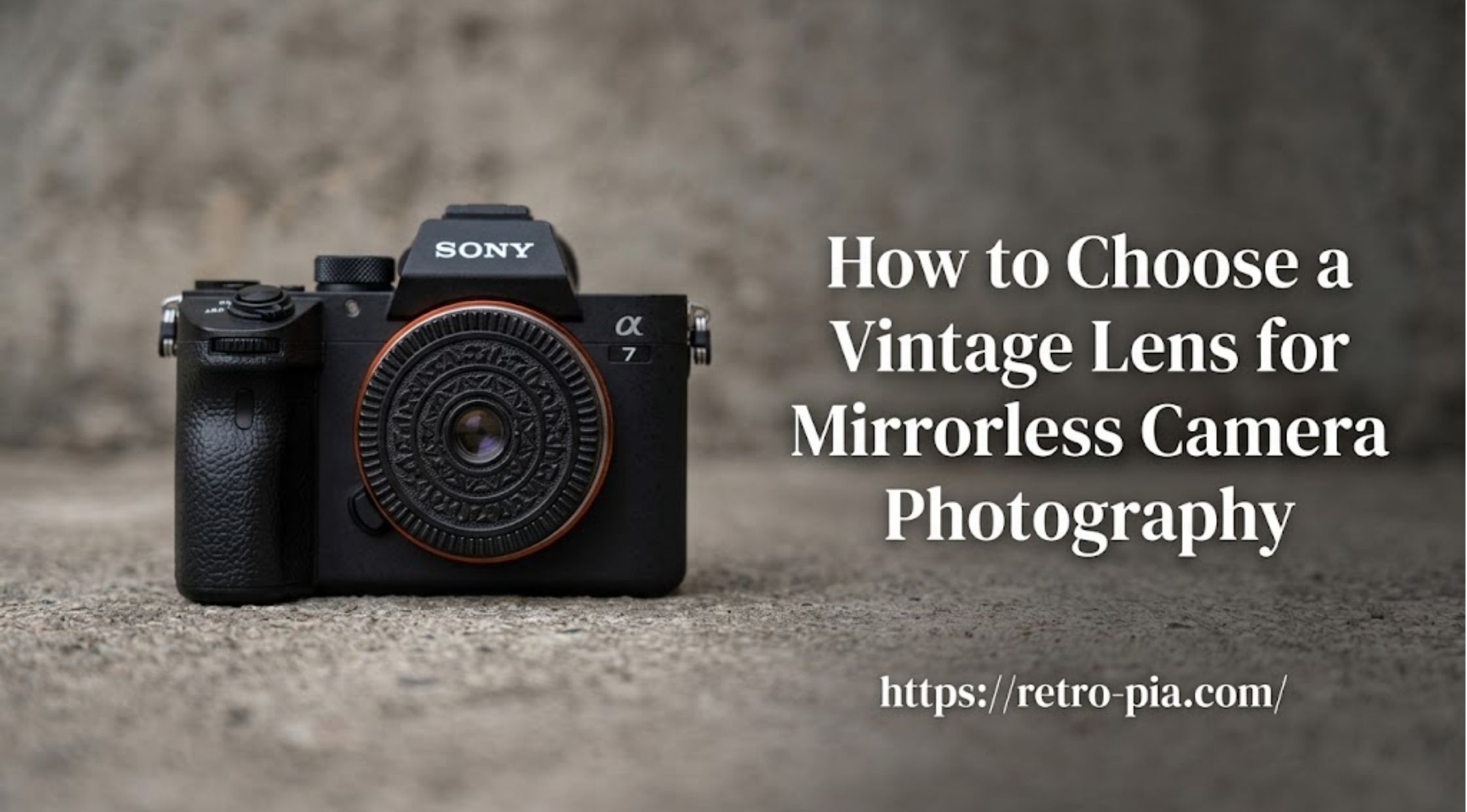
The details are incredibly sharp, colors are clean, and everything is technically impressive but the image somehow feels flat or lacks character.
Have you ever taken a photo with a modern digital camera and thought it looked almost too perfect? The details are incredibly sharp, colors are clean, and everything is technically impressive but the image somehow feels flat or lacks character.
That is one reason photographers are turning toward vintage-style photography. Instead of relying entirely on editing software to recreate the imperfections of film and older cameras, many are experimenting with lenses that naturally produce softer, more distinctive images.
Finding the right vintage lens for mirrorless camera photography, however, is not as simple as choosing the first retro-looking lens you find. Compatibility, image character, controls, and your preferred shooting style all matter.
Why Do Modern Photos Sometimes Feel Too Perfect?
Modern digital cameras are designed to produce technically impressive images. High-resolution sensors, advanced autofocus, sophisticated image processing, and modern optics can deliver exceptionally sharp photographs.
For professional work, this can be exactly what you want.
But for street photography, travel, portraits, or casual everyday shooting, extreme sharpness is not always the goal. You may want softer highlights, subtle vignetting, unusual flares, lower contrast, or the imperfect character associated with older photographic equipment.
This is where a vintage camera lens can offer something different.
Rather than correcting every optical imperfection, vintage-inspired lenses can make those characteristics part of the image itself.
Common Problems When Choosing a Vintage Lens
Shopping for vintage photography equipment can be exciting, but it can also create a few headaches.
Compatibility Issues
Older lenses were designed for different camera systems. A lens that fits one camera may not physically mount to another without an adapter.
Before purchasing anything, check your camera's mount and confirm that the lens is compatible with your system.
Too Much Manual Work
Many traditional vintage lenses rely heavily on manual controls. That can be enjoyable for experienced photographers but frustrating if you are accustomed to modern autofocus.
Think about whether you want a slower, more intentional shooting experience or the convenience of modern automation.
Inconsistent Image Quality
The imperfections that make vintage optics interesting can also make them unpredictable. Some lenses may produce significant softness, flare, distortion, or color shifts.
Those characteristics can be beautiful when used intentionally but they may not suit every subject.
Buying for Appearance Instead of Image Character
A lens can look wonderfully retro without actually producing the visual style you want.
Instead of choosing based solely on the appearance of the lens, consider what you want your photographs to look like.
What Makes a Vintage Camera Lens Different?
A vintage camera lens can produce optical characteristics that differ from modern precision-designed lenses.
Depending on the lens, you may notice:
- Softer image rendering
- Lower contrast
- Natural vignetting
- Distinctive lens flare
- Chromatic aberration
- Slight distortion
- Unique color rendering
- A more nostalgic overall appearance
None of these characteristics automatically makes a photograph better. The appeal comes from using them creatively.
For example, a little softness can complement a portrait, while flare can add atmosphere to a backlit street photograph.
How to Choose the Right Lens for Your Camera
Start With Your Camera Mount
This is the first thing to check when looking for a vintage lens for mirrorless camera systems.
Identify whether your camera uses Sony E, Fujifilm X, Canon RF, Nikon Z, Micro Four Thirds, Leica M, or another mount. Then verify that the lens is designed for that system or that an appropriate adapter is available.
Decide What Look You Want
Do you want soft, dreamy portraits? Strong vignetting? Film-like imperfections? Flare around light sources?
Knowing your preferred aesthetic makes the selection process much easier.
Consider Your Shooting Style
If you enjoy carefully composing each photograph, manual focusing can be part of the fun.
If you photograph fast-moving subjects or events, however, manual operation may slow you down. In that situation, consider whether the creative effect is worth the additional effort.
Look Beyond Specifications
Technical specifications matter, but vintage-style photography is often about character rather than simply maximizing sharpness.
Consider sample images whenever possible. Seeing how a lens actually renders photographs can tell you much more than reading a specification sheet.
Vintage Lens vs. Digital Filters
You can create a vintage aesthetic through editing software, presets, or smartphone filters. So why use an actual lens?
The main difference is how the effect is created.
A digital filter applies an effect after the photograph is captured. A specialized optical lens can introduce its character during image capture.
That can produce a more organic result, particularly when the lens interacts with light, highlights, and the camera sensor in its own way.
Neither approach is necessarily better. Digital editing offers flexibility, while optical character can make the shooting experience itself more creative.
A More Convenient Approach to Vintage Photography
Traditional vintage lenses can require research, adapters, maintenance, and experimentation. For photographers who want the aesthetic without spending hours searching through second-hand equipment, a purpose-built modern option can be appealing.
This is where Retropia takes an interesting approach. Instead of simply adding a digital effect, its photography products are designed to bring nostalgic, disposable-camera-inspired characteristics into modern digital photography.
A dedicated vintage lens for mirrorless camera use can make experimenting with retro aesthetics considerably more straightforward, especially when compatibility and convenience are important.
The idea is not to replace your modern lenses. Instead, it gives you another creative tool to reach for when you want something less clinical and more unpredictable.
Benefits of Upgrading Your Photography Setup
More Creative Possibilities
Adding a character-focused lens to your kit gives you another way to approach familiar subjects.
Less Reliance on Editing
When the optical character is created while shooting, you may not need to spend as much time trying to recreate the effect later.
A More Engaging Shooting Experience
Manual controls and unconventional rendering can encourage you to slow down and think more carefully about light, composition, and timing.
A Distinctive Visual Style
In a world where highly polished digital images are everywhere, imperfections can actually help photographs stand out.
Is a Vintage Lens Right for You?
A vintage-style lens is not necessarily the best choice for every photographer.
If you photograph weddings, commercial products, architecture, or other situations where maximum sharpness and predictable rendering are essential, a modern professional lens may remain your primary tool.
But if you enjoy street photography, portraits, travel, creative projects, or nostalgic imagery, a vintage lens can open up a completely different visual direction.
Treat it as a creative tool rather than a replacement for everything else in your camera bag.
Conclusion
The best vintage lens for mirrorless camera photography is not necessarily the sharpest, newest, or most expensive option. It is the one that produces a visual character you genuinely enjoy and fits the way you like to photograph.
Start by checking compatibility, defining the look you want, and considering how much manual control you are comfortable with. Then compare real sample images rather than relying only on specifications.
For photographers who want to explore nostalgic photography without hunting down obscure old equipment, Retropia offers a modern way to experiment with disposable-camera-inspired optical character.
Ultimately, photography is not always about making an image technically perfect. Sometimes, a little softness, flare, or imperfection is exactly what gives a photograph its personality.
Comment:
Your email address will not be published. Required fields are marked *
Search
Related Posts

Oct 20, 2026
How to Choose the Right Infrared Sauna for Home Use Without Wasting Space or Money
That is where an Infrared Sauna for Home Use can make sense.
Oct 16, 2026
How to Choose the Right Camp Snap Camera and Filters
What filters and camera to select for kids' camp.
Oct 16, 2026
How to Choose the Right Vintage Camera Lens for a Film-Inspired Look
Modern cameras are incredibly capable.